Are you audio curious? Love Japan and high end analogue culture? Have a niche interest in coffee and booze bars or even a guilty jazz fetish? Do you ever really listen to music, or is it just something in the background as the heavy stream of life bulldozers over you? Yes, yes, yes you say – so sit down and get in to our long read.
Philip Arneill’s photography project Tokyo Jazz Joints explores the Japanese jazz kissa culture. It inspired us to put on a couple of music listening events with him. Philip has also featured in and written for our own BOTHER magazine. We’re chuffed to bits to feature in this article written for the International Journal of Music Mediation.
In 2015, as I anxiously ascend the health and safety nightmare that is the creaking staircase of Pithecanthropus Erectus (Figure 1), a small rundown jazz bar in an equally rundown neighbourhood of Tokyo, I have no idea that I will still be doing the same thing in ever more obscure locations across Japan 10 years later. No idea what I’m beginning. This spring evening will set me on an adventure that will afford me the privilege of bringing a unique example of music mediation – Japan’s subculture of jazz kissa and jazz bars – to so many others. A project that will itself eventually include events promoting music mediation, evolving over its duration to satisfy Mautner-Obsts’s definition of “an artistic, educational, and communicative practice that aims to open up access to music for heterogeneous audiences” (Mautner-Obst 2018, 339, as cited in Petri-Preis and Voit 2025, 4). The small set of photos I take on that night of March 27, 2015 will lead to thousands more, to a four-edition photobook that will be sold worldwide, to a podcast, talks, exhibitions, presentations. And immersive ‘listening events’, the subject of this paper. These sum parts are now integral elements of a greater whole, an ongoing audiovisual documentary project known as Tokyo Jazz Joints, which I first christened in 2015, and have pursued ever since, in collaboration with music partner and friend, American broadcaster James Catchpole. As of 2025, I have photographed and documented upwards of 260 of the approximately 500 to 600 jazz kissa and bars that still exist across the Japanese archipelago.
The vernacular term jazu kissa comes from the Japanese pronunciation of “jazz” and an abbreviation of the word kissaten (喫茶店), which translates literally as “tea-drinking shop” (Arneill 2021, 82). There was a wide range of music-focused kissa in Japan’s pre-war period (Atkins 2001, 49), including European classical music, and even tango (Hosokawa, 2013, 114-115). Although jazz cafes such as Blackbird (1929) and Chigusa (1933) were founded at that time, it was in the post-war period when the concept of the dedicated jazz kissa truly emerged in Japan, and their number grew exponentially in the following decades, peaking in the late 1960s and early 1970s. They were designed as spaces where listening to music came first, often with the furniture arranged to face the altar of the speakers, and socialising, if tolerated, was controlled and delineated (Figure 2, 3). This paper will centre around the Tokyo Jazz Joints KIKU (which means “listen” in Japanese) immersive listening event, inspired by my own experiences of visiting and photographing Japanese jazz kissa and conceived as an attempt to bring even a little of that special atmosphere to an engaged audience, so that they too might experience the “formalized mode of hyperattentive listening” (Novak 2013, 93) “in a ‘quasi-religious’ temple-like space” (Derschmidt 1998, 308) that is so characteristic of this original, Japanese milieu of jazz music mediation.
Listening events were never my original intention. They were not something I ever had the need for when living in Tokyo, with its embarrassment of musical riches and a range of listening cafes, or music and record bars dotted throughout the city. Every jazz kissa there, and further afield, in some sense constitutes a kind of music mediation: a visit is a listening event of its own, as they are generally (although not exclusively) distinguished by “the presence of vast record collections and superb sound systems, with clientele who principally, and often exclusively, visit such kissa to listen to the collection of jazz recordings” (Hosokawa 2013, 109). Originally, anything beyond capturing these spaces for posterity was never part of my plan, for I am, first and foremost, a photographer. I do not feel it is not my role to educate. Rather I see it as to document, to reflect. Seated inside, immersed in a project that faces outward, for others to see. My camera acts as both tool and buffer, affording me a simultaneous “point of connection and […] point of separation” (Meiselas n.d.). I am also not – as I often reiterate to attendees at the listening events in focus here – a jazz aficionado; rather, I’m a photographer who loves jazz. And yet, in spite of myself, on April 22, 2025, I am once again at the helm of another Tokyo Jazz Joints immersive listening event (Figure 4), racked with the conflicting feelings it always inspires in me. More music mediation in the impossibly quaint, now hip village of Hebden Bridge.
It’s a familiar pattern that has brought me to this unfamiliar room, with its picture window perfectly framing the sweeping curves of the Pennines. A flurry of excitement that resulted in a flow of emails between organiser, venue and designer, and the event was planned. Up and running online (the digital conduit for an immersive analog experience), tickets sell quickly, inexplicably to me, no matter how many times it happens. Sold out. So I parked it away, as it fell down a tick list until the day drew nearer, signposted by that creeping spectre of the preparation that must be done. Records to be chosen. Stories that must be remembered, retold. Disparate threads embroidered so that they intertwine seamlessly with the grooves of a silent, expectant audience. Now that day has arrived, and I’ve woken with a familiar sense of foreboding at the pressure of carrying an audience along with me, an audience unused to the format, in a space which I do not know. Will people cancel? Will they turn up? Will they buy into the concept? Will people enjoy themselves? There’s no real way to back out now even if I want to, and with a little luck, like all good things, the pressure and expectation will help carry the event and make it a success. Not for the first time, or likely the last, I find myself wondering why I self-inflict these feelings, as the sound of the coffee grinder bleeds through from the kitchen and Ed’s cheery ‘Morning!’ snaps me into action.
Meeting Ed Oxley, one of the co-founders of British-designed and -manufactured clothing company HebTroCo, was just one of the many coincidental and enriching connections I have been lucky to forge through the Tokyo Jazz Joints project. It was, in fact, yet another of these connections that allowed us to first become acquainted. Mingling awkwardly on the shop floor of Rare Mags, a specialist bookshop tucked away in the bohemian Underbanks area of Stockport that has been an enthusiastic supporter of the Tokyo Jazz Joints photobook, as I prepared to give a small instore performance piece and talk about the project, I overheard Ed talking to his friend about ‘the podcast’. The Tokyo Jazz Joints podcast was started in the depths of the first lockdown in 2020 to mark the 5th anniversary of the project that had first begun on the aforementioned creaking staircase. As I sat in a dilapidated terraced house in Dublin’s South Inner City district, James Catchpole, my long-term collaborator, was in his self-styled “rough and gritty streets of north Yokohama” (Catchpole n.d.) in the still relatively restriction-free Japan, and we recorded what we thought would be a one-off episode. On account of the surprisingly positive reaction and the sudden need to live vicariously through past experiences on account of the changes Covid had wrought, I continued to plan and produce episodes, and a weekly recording session became a ritual that helped mitigate the boredom and uncertainty around us. Gradually, we moved from rudimentary, free online platforms to proper recording equipment. We have continued recording regularly to the present day, and the podcast now consists of over 90 episodes with a combined total of over 185,000 listens worldwide (Figure 5).
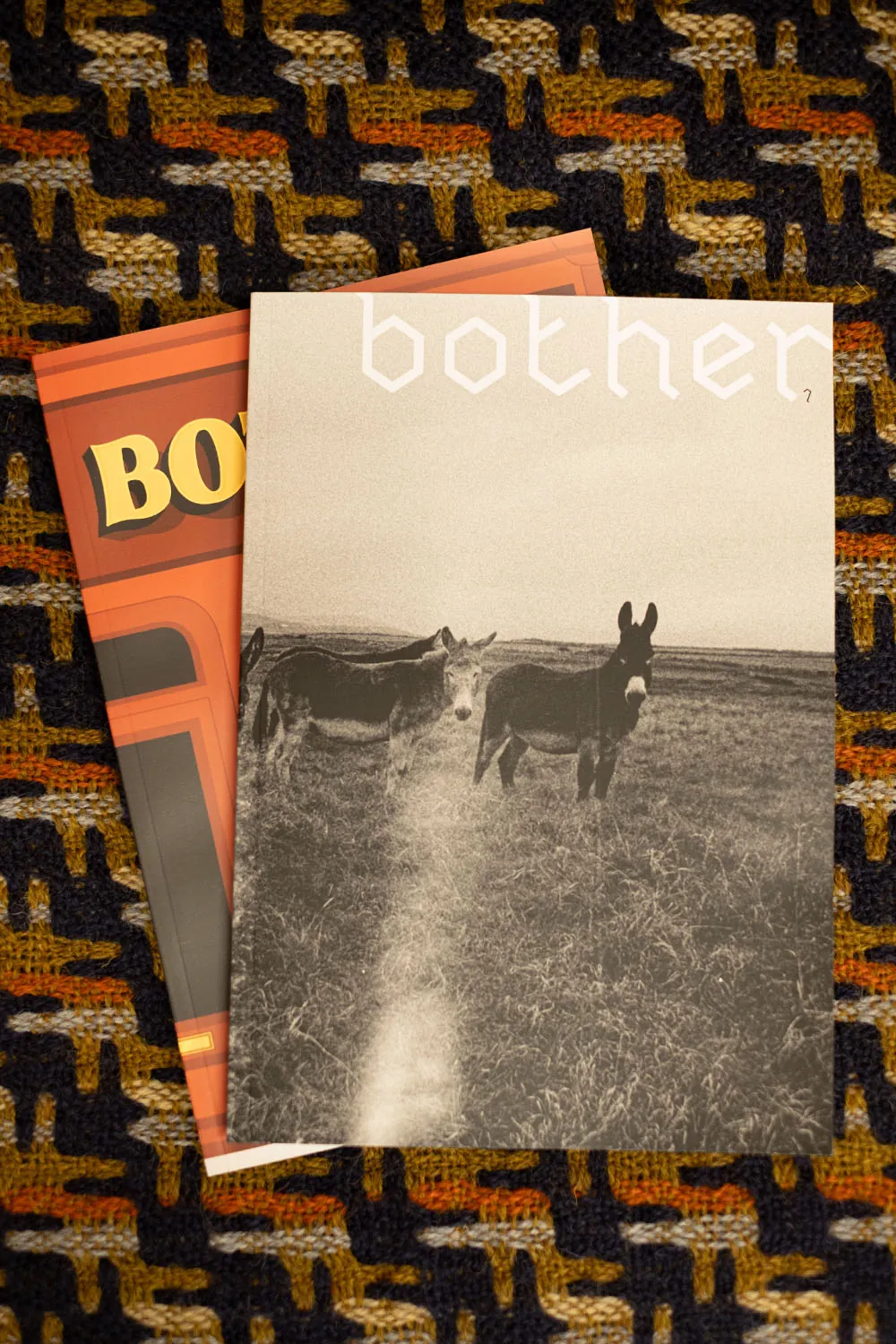
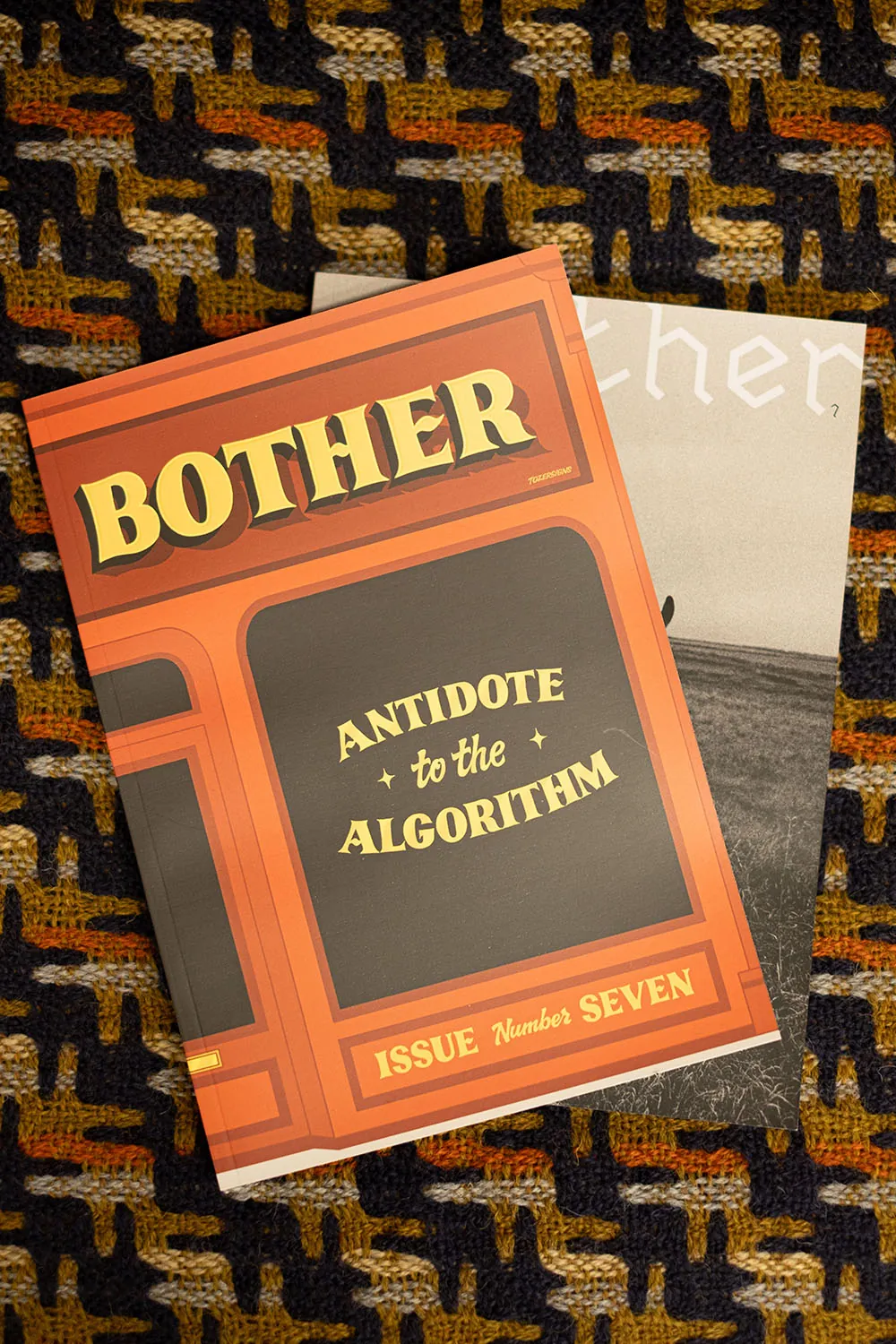
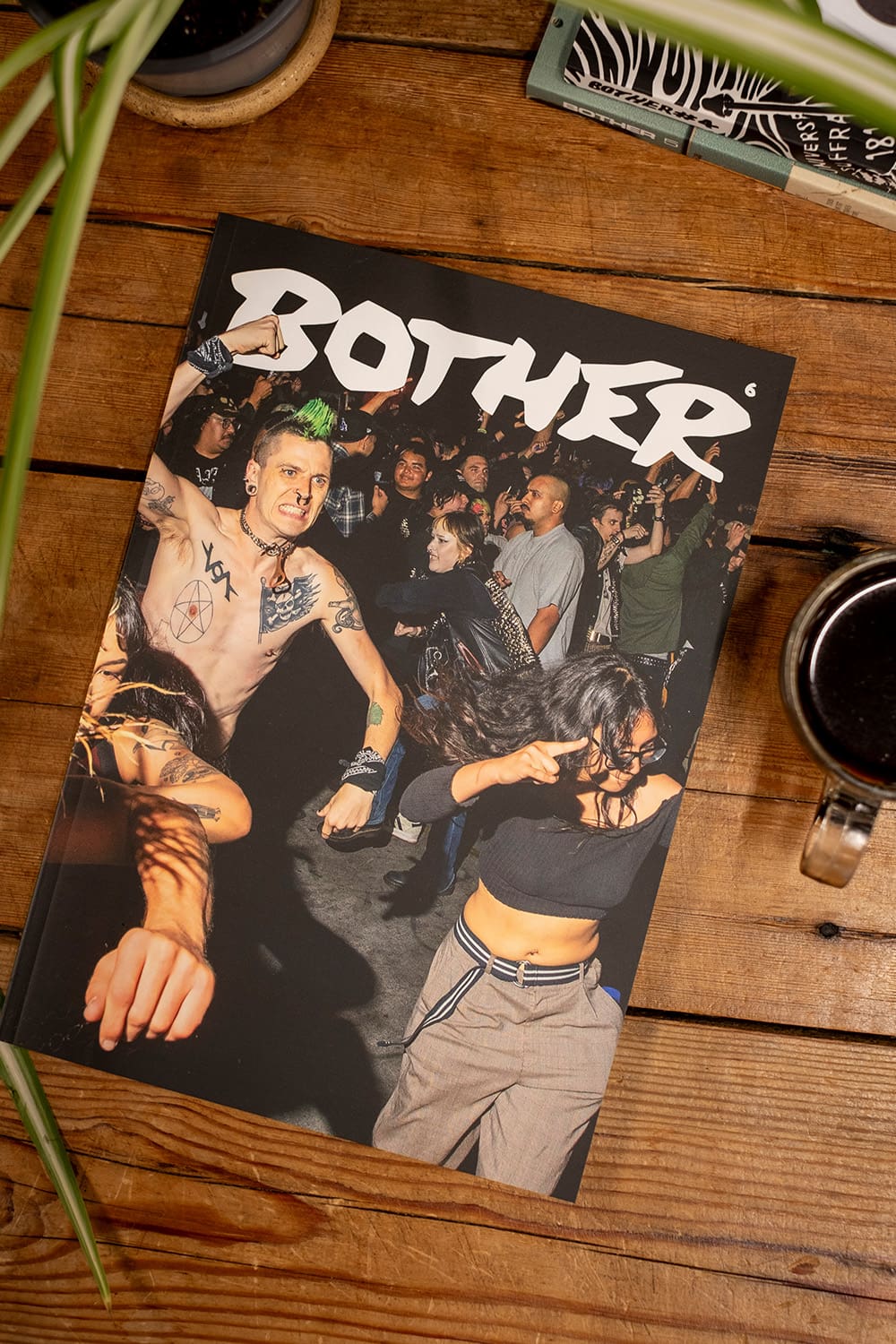
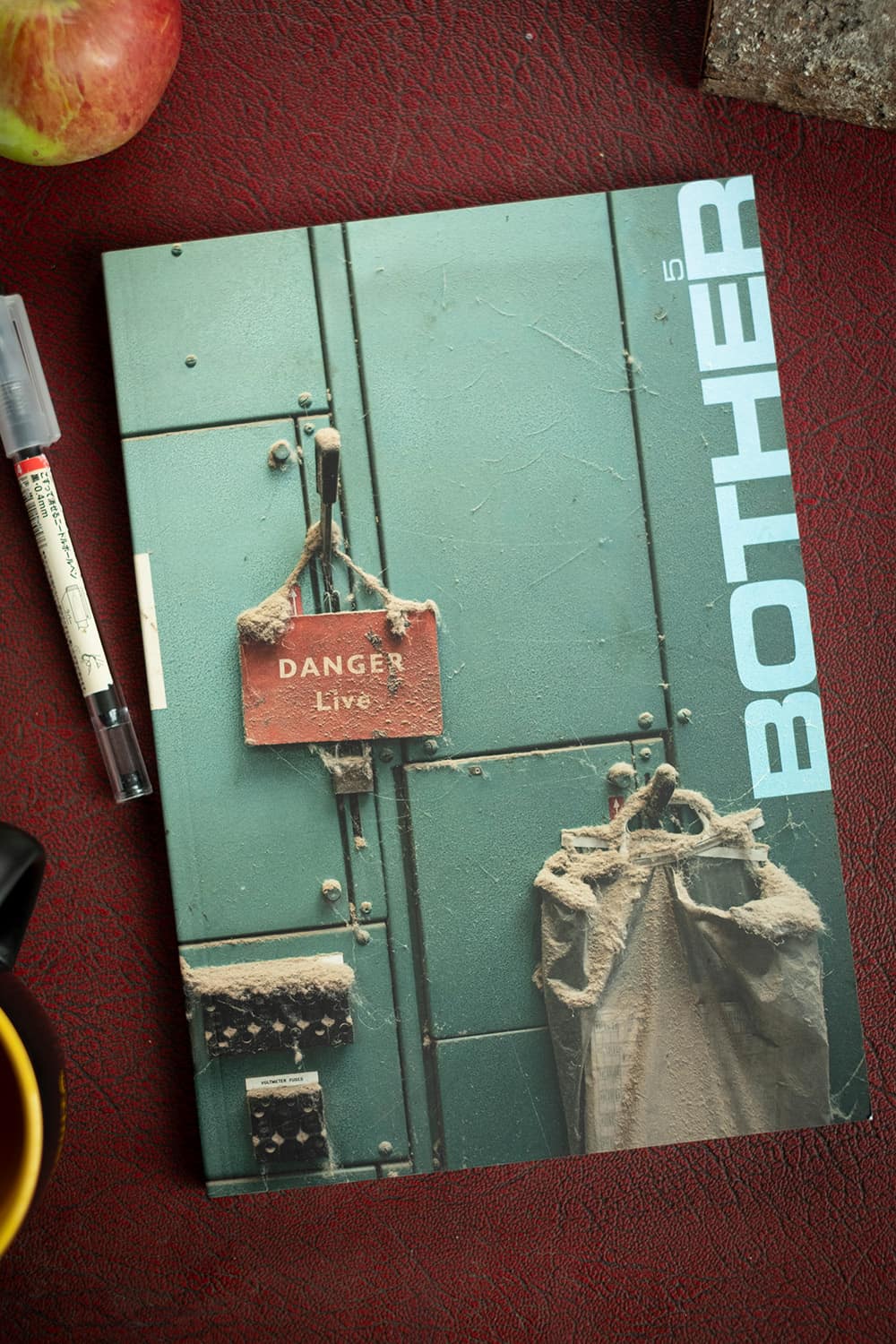
As we talked further, Ed revealed, much to my surprise, that he had come across the podcast in lockdown, when it had apparently helped him get to sleep many nights: an arguably dubious compliment. We continued to communicate after this initial meeting and having discussed the idea of bringing a listening event to his local area of Hebden Bridge, Ed made the journey over to Belfast to experience firsthand one of the TOKYO JAZZ JOINTS x rattlebag listening events that I have produced and honed over the last three years in the luxurious confines of Rattlebag, a cocktail bar in the Bullitt hotel in Belfast’s city centre. Ed in turn added another strand to this tangled web by subsequently recounting his trip and highlighting the wider Tokyo Jazz Joints project in the 4th issue of Bother magazine (Oxley 2025), a free, quarterly print magazine produced by HebTroCo.
In hindsight, the original idea of a listening event was perhaps borne out of frustration as much as anything else. Having left Japan for my native Ireland almost two decades after arriving there in 1997 as a naive 22-year-old, I was suddenly starved of the spaces that had become my obsession since I began photographing them in 2015. I had become, simply, one of the “jazz kissa freaks” (Hosokawa 2013). Now based in Belfast, being approached by local producer Claire Hall and DJ Marion Hawkes was the catalyst to address the want by creating a jazz kissa-inspired event in my hometown (Figure 6). A conscious decision was made to approach the event almost as a form of performance art, and clear expectations were established for the comfort of all. Tables and chairs were arranged to facilitate socialising, and once attendees had arrived, after a certain time, doors were closed (similar to the theatre) and no entry was permitted. The original format of the event persists to the present:
The rationale and expectations for the evening were then explicitly established: three jazz tracks had been chosen for focused, deep listening and, as such, the audience was encouraged not to talk, to put their phones away, and to refrain from documenting the event for social media during these tracks. Each track would be introduced before communal listening. I also explained that between the three curated tracks, a selection of jazz would be played on vinyl (at a lower volume) while the audience chatted, ordered drinks, or used the bathrooms, to offer a counter to the dedicated listening sections. These rules were not intended to restrict enjoyment, rather to facilitate complete immersion in the music, create an exclusive communal experience, and encourage active listening to jazz. I felt that clarity was key here, as most of those present could not have known what to expect otherwise, and although the event was intended to be a little challenging, its foremost purpose was nevertheless to provide a unique and enjoyable experience. (Arneill 2023, 11)
The pressure I feel to make the event successful by balancing adherence to these rules with the enjoyment of paying customers is, however, transcended by the thrill of immersive listening and recreating – albeit only temporarily; by the distraction-free and music-centric environment that a jazz kissa provides. My autofictional recollection of the first ever listening event – staged in the newly opened Sound Advice record shop, and documented in Dragon Dance: A Japanese Jazu Kissa-Inspired Communal Listening Experience In The Heart Of East Belfast – recalls the Billy Harper track I chose:
A solitary, haunting sax cuts through the cold December air. The sound of Billy Harper soars above bowed heads, invisible – not only to the closed eyes – as it spills through the space. Faithful to the track’s name the gradual crescendo is reminiscent of a large, soporific animal rousing itself from sleep. I’ll forever associate it with the image of a rhino, rising slowly and steadily, building towards eventual action. Captivating. (Arneill 2023, 11)
This excerpt suggests that for the most part, I was able to ignore the winter chill, the stress of how the event would be received, or whether it would even work, instead enjoying the communal experience of listening as one to ‘The Awakening’. Despite my doubts, through this curated record-listening environment, I had created a space in which “playing vinyl encourages various ritualistic engagements: localised immobile and immersive listening, [and] careful selection” (Bartmanski and Woodward 2015, 22). Not unlike the jazz kissa 6,000 miles away in which I so longed to sit.
The experiment was successful. Similar to the production of any event, the approach has been honed gradually through trial and error. I play jazz music on vinyl for the duration of the event, and at designated times, stop the music, and introduce one of the three (or four) curated listening sections, for which I have selected a specific track with some significance to the project: I introduce each track with a personal anecdote of visiting a jazz joint and photographing it. The length and genre of tracks varies from event to event, and are sometimes themed, other times not. For example, one may be themed around specifically Japanese jazz; one Valentine’s Day event I chose ‘love’, more specifically, A Love Supreme, which I played in its entirety in four distinct listening sections. Although unintentional on my part, people have often approached me to ask about the provenance of a record, or to double check names and titles so they can do research and acquire the music for their own collection. From time to time, it’s their first encounter with a particular artist. As the artistic and educational aspects of the event have continued to intertwine, a format of fundamental criteria that ensure a fully immersive listening experience quickly emerged, one that has changed little since its first iteration in 2021. The key elements necessary to the success of the event are:
a closed, intimate space (e.g. bar or cafe), the audience all seated, with table service, and no bar service during the curated listening sections
a professional sound system, ideally with two turntables
tickets sold at a minimal price to encourage attendance: and these are usually capped around 40–50 tickets (depending on the space), and include a welcome drink
encouraging attendees – via email reminder and social media channels – to come promptly after the doors open and to take their seats, clarifying that the doors will close again before the event begins
introducing myself, and explaining the event’s context (jazz kissa culture and my connection with it through) and its format
completely fading out a track that is playing, in order to get the attention of the room, or to indicate an introduction to another curated listening section
asking people explicitly not to talk, film or be on their phones during the curated, immersive listening section; lights are also lowered for more intimate atmosphere
when a track ends, reiterating the name of track and artist, and indicating approximately when the next curated listening section will begin, in order to accommodate toilet/cigarette breaks or drink orders.
The events have been incredibly popular. Each and every one to date has sold out quickly. It is not easy (or necessary perhaps) to pinpoint the event’s appeal, but the consistently and truly diverse range of attendees, from university students to retirees, suggests an intersection of attraction: jazz lovers, Japanophiles, record collectors, those in search of a unique experience, or simply people not wanting to miss out on a ‘new thing’. All of these are motivations that can be argued as contributing to a “more inclusive and diverse public musical life, fulfilling the idea of comprehensive cultural participation and cultural democracy” (Petri-Preis and Voit 2025, 5). One attendee told me as he left the Valentine’s Day event in 2023, “although I have heard A Love Supreme many times, tonight was the first time I actually listened to it”. This was affirmation that what these Tokyo Jazz Joints listening events had evolved into was indeed “a communal project of awareness for rethinking the potential of sound and silence in uniting seemingly different paths and lives” (Ernstberger 2023), and evidence of the higher attainment level of listening defined by Brandon LaBelle in The Poetics of Listening as: “a broader form or quality of attention,” one that brings “all the senses together, enhancing receptivity, feeling, care as well as reflection, knowing, intuiting […] a way of attending to things, a way of caring, that extends far outside the sense of hearing” (LaBelle 2025, 8). I have now produced and hosted over 35 immersive listening events, and whilst the majority have taken place in Rattlebag – which has become somewhat of a spiritual home for the event – I have also hosted events in Dublin, Mannheim, London, Bangor (Northern Ireland) and Hebden Bridge, the subject of this paper (Figure 6). The purpose of these events, however, is not one of data collection: they are first and foremost for entertainment and promoted accordingly. They are a space in which I might share my stories of jazz kissa, and connect these with selected music, which in turn connects with the assembled audience, that they might then make their own connections. As such, they are, I believe, an example of Budhaditya Chattopadhyay’s conceptualisation of ‘co-listening’, which goes beyond Michel Chion’s concise definitions of ‘causal’ or ‘reduced’ listening (Chion 1994) to “involve the context of the listening act,” nurturing “its social and communal potential” (Chattopadhyay 2023, 151).
For the Hebden Bridge iteration, I chose the name KIKU as a subtle nod to the concept of the event and as a way to differentiate it from the regular event in Belfast without changing format or style. With help from Ed Oxley, Coin – an atmospheric small plates restaurant in an old, converted bank building seating just over 40 people – was secured as the venue. Tickets sold out quickly. In mid-April we were approached by Edward Forth, a technician for Japanese company Audio-Technica, who offered to provide his bespoke jazz kissa sound system, built as a hobby project and featured at the Leeds Jazz Festival in 2024 and 2025 under the auspices of his Club 15 Sound Selectors project. This generous offer from a fellow music mediator lent a further layer of authenticity to the planned listening experience, bringing it even closer, both visually and aurally, to that of the classic Japanese jazz kissa (Figure 8).
I’ve finished my introduction and moved around to a stool in front of the speakers so I too can enjoy the sound from an optimal angle. First released in 1974, Misty and I are exactly the same age. Each exquisite note played by Tsuyoshi Yamamoto echoes through the speakers and resonates around the room, creating a thoroughly electrifying effect. I’m aware it’s a ballsy choice for an unknown audience. There’s nowhere to hide with this one, yet the room is silent, save for the very distant sound of clearing up in the kitchen, and the timeless piano solo fills the main room of the old bank. It’s a classic album on a legendary label, and I’ve just recounted the first time I got to hear it properly on a towering set of JBL speakers in the city of Kochi, tucked away deep on the southern coast of Shikoku island, in a kissa called Debby, named for Bill Evans and run by a jazz-loving salaryman and his very patient wife. He asked me about the records I’d bought, and having played one from the Three Blind Mice catalogue, he couldn’t resist playing his own. We sat in the space, devoid of customers other than myself and my partner, and listened in saturated silence to a 50-year-old rendering of the jazz standard ‘Misty’. As I travel from kissa to kissa, records have a way of following me around, and having more recently added it to my own collection, I too am now unable to resist sharing it with a captive audience. Just like that muggy day’s music mediation in Kochi, people sit spellbound to my left, as we share in this seven minutes and sixteen seconds of jazz magic. Some stare at the ceiling, others sit quietly with their eyes closed. It’s utterly serene. No one speaks. No one looks at their phone. There’s no sense of this shared silence being awkward. The event now up and running, they get it. I feel the possibility of relaxing a little, of leaning in, enjoying it even, as Testsujiro Obara’s shimmering symbol heralds the end of the song. Two records down, one Isiah Collier killer to go.
As previously referenced, this project never began with music mediation in mind, although it may always have had it concealed at its heart. What began as an experiment, something as unsure as my initial approach when ascending the stairs of Pithecanthropus Erectus, developed its own identity, a rigour and longevity that has surprised even me, and led in turn to further experiments, among them the anecdote and curated record-led immersive listening events. A straightforward photographic project gathered momentum and evolved in myriad directions over time and has now become a multi-faceted example of music meditation: “a broadly diversified artistic-educational practice that fosters diverse relationships between people and music,” and subsequently a discussion of “the formats, contexts, and stakeholders involved” (Petri-Preis and Voit 2025, 1).
The explicit, structured format of the event may at first seem counterproductive to the freedom of listening to jazz, but I would argue that it is in fact what guarantees it in this particular context. Expectations are clear and, almost without exception, there has never been a need to reiterate the ground rules during or after the immersive listening sections. In a world of near-constant stimulation, “the ability to have a communal experience where personal silence is the pervading dynamic is increasingly difficult” (Arneill 2023, 15), so asking people not to talk for any length of time in the social setting of a bar was a very rational fear with which I began this experiment, but it has, to date at least, proven to be unfounded. The beauty of this consensual, mutually agreed silence – or perhaps the “stealth” proposed by Martínez as an alternative to binary definitions of noise vs. silence (Martínez 2023, 16) – is that everyone who attends can not only experience listening as “an inherently personal undertaking”, but also Oliveros’ “element of community in listening practices,” […]encompassing “the myriad of ways in which listening facilitates exchange” (Ernstberger 2023).
I would like to return briefly then, in conclusion, to the theme of freedom, as it is a theme that has been intertwined with the Tokyo Jazz Joints project since its inception; one of the enduring images from the modest selection I took on that auspicious evening in 2015 was the famous quote attributed to Thelonius Monk, that “Freedom and jazz go hand in hand” that was (and remains to this day) paraphrased on the back of the toilet door in Pithecanthropus Erectus (Figure 9). Complete ownership of my work has allowed me the creative freedom to present, publish and disseminate with a high degree of independence, and in turn, through these listening events create a space in which attendees can also feel free to experience a little of what I have been lucky enough to experience in over 260 jazz kissa and bars across Japan to date. There is freedom also to come alone, enjoy the music, talk to others or not, without making any judgements. As stated before, people are not coming ‘to be educated’, but rather to enjoy the evening (alone or with friends) and if they hear a track or artist that moves them, even better. There is, however, no pressure to react in any predetermined way and, in fact, conscious of the kind of snobbery often found around art and music (and jazz in particular), I do as much as I can in my intros to puncture any pretentiousness, by acknowledging the diverse motivations of the audience through jokes about jazz: one of my favourite go-to comments is often, “If you didn’t like jazz before this evening, you definitely won’t like it by the time you leave”. This kind of comment seems to quickly diffuse any tension, perceived or otherwise, and much as the format and explanation of the event gives people permission to be quiet and just listen, so too these jokes allow them to experience the music in any way they feel free to do so, love it or hate it, for what is art and music, if not something to provoke some reaction beyond lukewarm indifference? This freedom has even extended to myself in both the literal and metaphorical sense: Journey to the One(Arneill in preparation), was selected as part of the forthcoming Turntable Stories collection of vinyl record-inspired writing. Based on my relationship with the Pharaoh Sanders track, You’ve Got To Have Freedom, the crucible of auto-fictional writing has allowed me to reflect on my listening events and how they have also functioned as a way of processing traumatic personal events and represent healing.
It bears reiterating that, from the outset, these listening events were designed to be a relaxed, informal environment in which I could share some of my experiences in order to give others entertainment and enjoyment. As such, I am conscious of burdening them with analysis or overstating their impact, but it seems undeniable that “this shared experience of going deep into sound together, unravelling and creating with each other” (DJ MARIA, in Ernstberger 2023) and the format of the event are not unlike Roland Barthes’s concept of idiorrhythmy, which LaBelle summarises as “a way to imagine models being alone and being a part of life with others at the same time” (LaBelle 2019, 71); this experience presents the opportunity to “take home a changed way of perceiving the world” (DJ MARIA, in Ernstberger 2023). There is a pleasing circularity to sharing my experiences with others by curating an experience for them, when they in turn seek out subsequent musical experiences which have – on one particularly notable occasion – directly contributed to new experiences for me. This is representative of Müller-Brozović’s model of music mediation as a “relational approach” that “emphasises the interconnections between participants” (Müller-Brozović 2025, 1-2). Which brings me to Aileen’s story, an incredible real-life manifestation of this interconnectivity, and an example of the truly transformative power of music mediation through the Tokyo Jazz Joints listening events.
Aileen, a retiree from just outside Belfast, attended her first Tokyo Jazz Joints listening event on January 24, 2024 (Figure 10), knowing little to nothing about what she had bought a ticket for. Inclusion of this particular event on the programme of the Out to Lunch festival in Belfast had resulted in widening the event’s promotional net, and it snared Aileen, who bravely came on her own. The effect was immediate.
I’d no idea what to expect from the Rattlebag event but, as ever, went with an open and curious mind. The small intimately lit venue is perfect for a jazz evening. I didn’t know Japan nor had I heard of jazz kissa. Philip’s introduction set the scene and the format suited the music perfectly. It’s a rare treat to be able to enjoy music in a bar without background chat. Musing on the way home on the serendipitous nature of my attendance, ticket bought on a whim, actually making it out the door on a cold January night, I reflected on just what a pleasure the evening had been. I experienced music I didn’t know and heard about a culture new to me, time had flown. I would return. (Aileen 2025)2
As music mediation goes, its impact was powerful, proof of Petri-Preis and Voit’s claim it can “establish connections between people and musics, bringing together individuals and communities who might not encounter each other in everyday life, and create links to diverse musical practices” (Petri-Preis and Voit 2025, 4-5). Aileen did indeed return, each event, and we would usually grab the opportunity for a short chat during each of her subsequent visits. One comment that started as a joke increasingly became more serious, and several months later Aileen announced that she had taken concrete action on a previous declaration, namely, “during a chat [with Philip] after the event I heard myself announcing I would have to go to Japan to experience real jazz kissa. I thought about that on the way home too. Would I make it?” Aileen did make it. In February 2025, she took the ten-day trip of a lifetime to Japan that she had never imagined she would, to experience jazz kissa firsthand.
Early on my first day in Tokyo my local guide picked me up for a day out. She had never been to a jazz kissa but was very amenable to tweaking our itinerary to try and find at least one. Philip had kindly given me details of a number of kissa and eventually we found ourselves outside a nondescript building looking up a steep flight of stairs towards Masako, my first kissa. Philip’s description of these tiny venues meant I knew what to expect. Masako is very small, with one wall of floor to ceiling vinyl albums, a tiny bar and seats for maybe twelve customers. Quiet enjoyment of the music, good coffee, some cake; what more could one want? If I hadn’t gone to Rattlebag that January night this world would have remained undiscovered, I’d never have gone to Japan. That’s quite the return on the price of my ticket. (Aileen 2025)
This quotation underplays Aileens’s trip somewhat, as she visited a number of classic jazz kissa, and even got to experience some that I would consider much ‘deeper’ than those people might ordinarily experience their first time. Once such a joint was the exquisite, newly opened Chetty in Kyoto (Figure 11), named for ‘Chetty’s Lullaby’ by Chet Baker and a truly unique space. As if to square the music mediation circle, when I then visited it for the first time in May 2025, three months after Aileen, I was able to use the memory of her visit and my connection to build a rapport quickly with its female owner, which enhanced my experience and – from a purely practical point of view – also enabled me to gain permission to photograph, despite the owner having made the decision to no longer allow photography of the space on any device due to some trouble she had experienced with two customers the previous day.
I still find it remarkable to reflect that the serendipitous purchase of a ticket for a listening event – one originally borne out of my own frustration and melancholy – designed simply as an evening of entertainment and new cultural experience could spark such an empowering chain of events; so when that dread of preparation and pressure of expectation begins to rise as the day of an event draws nearer, I think of Aileen’s story (and that of all the enthusiastic attendees), and the truly transformative power of music mediation.
It’s a recognisable buzz, as the adrenaline subsides. Magic moments that will be remembered, like the spontaneous whoop from one listener, so completely taken as she was by the electrifying conga solo on ‘Dragon Dance’ by Makoto Terashita with Harold Land. Less magic though when she dropped her heavy metal fork on the stone floor. There’s a flurry of activity at the bar behind me, and the clink of glasses being washed, as people reflect on the event, or retire gradually back to their individual lives. They leave having experienced something different to the person seated next to them, yet we’ve all shared in a common experience: coming together around the radical act of shared listening (Ernstberger 2023), an act even more radical in a world increasingly defined by continual distraction and attention-grabbing devices. I know, despite the event’s reception, that I’ll return to this familiar cycle of excitement, planning, dread, nervousness and elation. It’s not dissimilar perhaps to the way that music can play with our emotions, and despite the fear, I imagine I’ll be seated in exactly the same position again before too long – while the audience and venue may differ, the feelings will not – and perhaps it’s that trepidation, a desire for people to have a unique experience, to really experience even a little bit of the incomparable atmosphere of a jazz kissa, that keeps it sharp, that keeps me striving to create a truly immersive listening experience.
This image was created on a field trip financially supported in part by an Japan Foundation Endowment Committee (JFEC) Award.↩︎
Although I have met and spoken with Aileen multiple times, these quotations were taken from four questions sent by email on June 1, 2025.What was your first impression of the listening event when you turned up? Were you unaware of what you were coming to?What were your thoughts/feelings after the event was over and you left?Was there a specific tipping point/moment when you decided you were going to go to Japan to experience jazz listening cafés for yourself?When you finally went to some jazz kissa, how did they measure up to what you were expecting, based on what you’d experienced at Rattlebag?↩︎
References
Aileen. 2025. Personal Interview.
Arneill, Philip. 2021. “Tokyo Jazz Joints: Japanese jazz kissa as heterotopia.” Jazz-hitz 04: 81-96.
Arneill, Philip. 2023. “Dragon Dance: A Japanese Jazu Kissa-inspired Communal Listening Experience in the Heart of East Belfast.” Riffs: Experimental Writing on Popular Music 6, no. 2: 8-18.
Arneill, Philip. In preparation. “Journey to the One.” Turntable Stories – Narratives, Memories and Histories from In-between the Grooves. Sheffield: Equinox eBooks Publishing.
Atkins, E. Taylor. 2001. Blue Nippon: Authenticating Jazz in Japan. Durham: Duke University Press. DOI: 10.1215/9780822380030.
Bartmanski, Dominik, and Ian Woodward. 2015. “The vinyl: The analogue medium in the age of digital reproduction.” Journal of Consumer Culture 15, no. 1: 3-27.
Chattopadhyay, Budhaditya. 2023. “Co-listening: Theory and Practice.” In The Listening Biennial Reader, 147-157. Berlin: Errant Bodies Press.
Chion, Michel. 1994. Audio-Vision: Sound on Screen. New York: Columbia University Press.
Derschmidt, Eckhart. 1998. “The Disappearance of the ‘Jazzu Kissa’: Some Considerations about Japanese ‘Jazz Cafes’ and ‘Jazz Listeners’.” In The Culture of Japan as Seen Through its Leisure, edited by Sepp Linhart, and Sabine Frühstück, 303-315. Albany: State University of New York Press.
Hosokawa, Shuhei. 2013. “The Swinging Phonograph in a Hot Teahouse: Sound Technology and the Emergence of the Jazz Community in Prewar Japan 1.” In Sound, Space and Sociality in Modern Japan, edited by Joseph D. Hankins, and Carolyn S. Stevens, 108-126. London: Routledge. DOI: 10.4324/9780203761298.
LaBelle, Brandon. 2019. “Togethering, of the Open Body.” In The Middle Matter: Sound as Interstice, edited by Caroline Profanter, Henry Andersen, and Julia Eckhardt, 65-73. Dijon: Les Presses du Réel.
LaBelle, Brandon. 2025. Poetics of Listening: Inner life, Social Transformation, Planetary Practices. New York & London: Bloomsbury Publishing.
Martínez, Israel. 2023. “Searching Stealth, Not Silence.” In The Listening Biennial Reader, vol. 1: Waves of Listening, edited by Brandon LaBelle, 15-16. Berlin: Errant Bodies Press.
Müller-Brozović, Irena. 2025. “Towards a Resonance-Oriented Music Mediation: A Theoretical Foundation of Vibrant Music Relationships.” International Journal of Music Mediation 1. DOI: 10.71228/ijmm.2024.9.
Novak, David. 2013. Japanoise: Music at the Edge of Circulation. Durham: Duke University Press.
Petri-Preis, Axel, and Johannes Voit. 2025. “What Is Music Mediation?” International Journal of Music Mediation 1. DOI: 10.71228/ijmm.2024.14.
Author Biography
Philip Arneill is a Belfast-born photographer, writer and researcher who spent 20 years living and working in Japan. His Tokyo Jazz Joints photographic monograph was published in 2023, and is now in its 4th edition in English, and 1st edition in Japanese (Seigensha). Currently based in Ireland, Philip’s artistic practice explores illusory ideas of home and culture by examining place and identity, insider-outsider dynamics, and diminishing cultures, combining images with creative nonfiction texts. His work has been published and exhibited worldwide.